
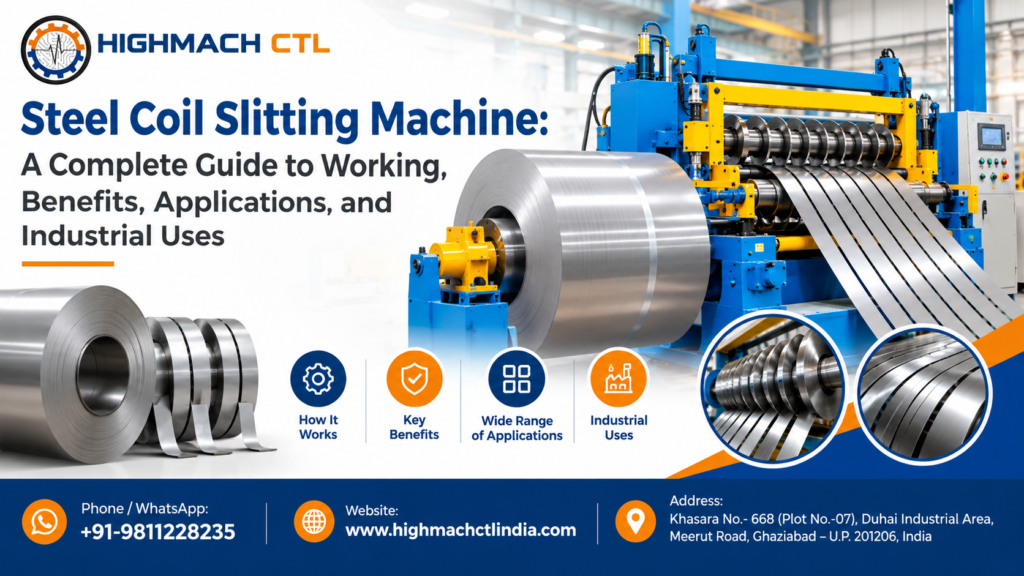
Steel Coil Slitting Machine: A Complete Guide to Working, Benefits, Applications, and Industrial Uses
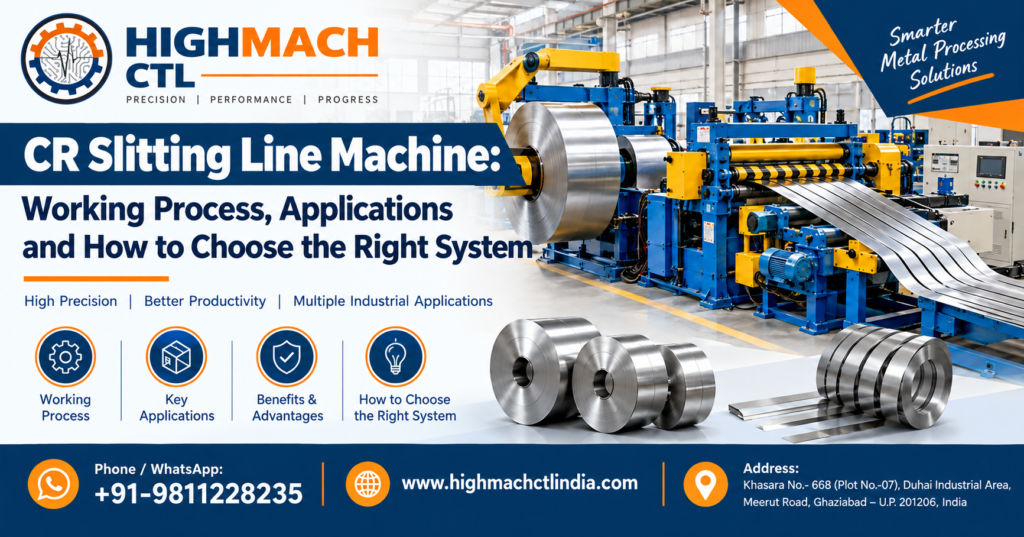
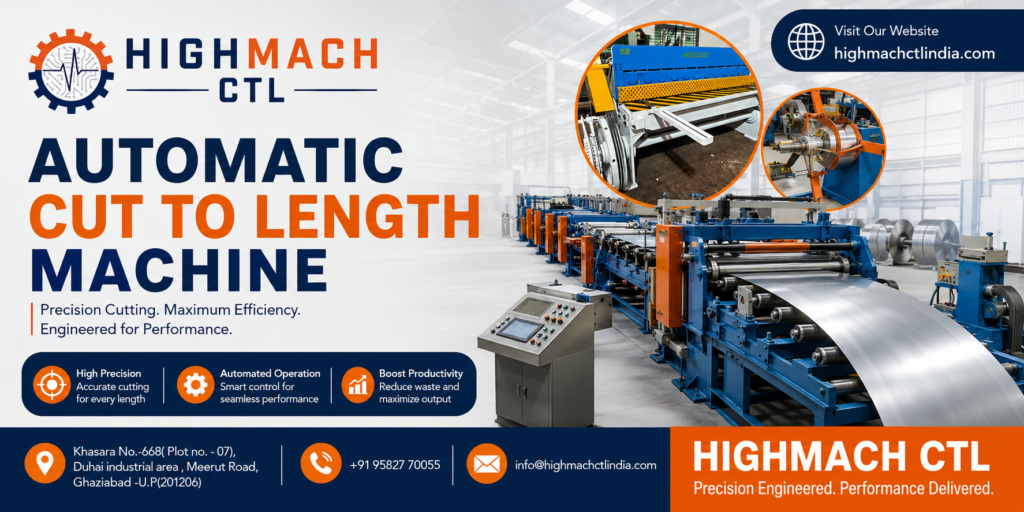
Modern metal processing starts with wide steel coils, but most production lines need narrower strips cut to exact widths. A steel coil slitting machine bridges that gap. It cuts a master coil into several strips of specified width, ready for forming, stamping, or fabrication. Accurate and efficient slitting matters because every downstream process, from roll forming to tube making, depends on consistent strip dimensions and clean edges. This guide explains what a steel coil slitting machine is, how it works, the features to check before buying, its benefits, and where it is used. It also includes a comparison table and answers to common buyer questions. What Is a Steel Coil Slitting Machine? A steel coil slitting machine is metal processing equipment that unwinds a wide coil, cuts it lengthwise with circular blades, and rewinds the resulting narrow strips into smaller coils. These strips are often called “slit coils.” The main value of slitting is control. A manufacturer can buy a wide master coil and convert it into the strip widths that production requires. This supports better material utilization and helps keep strip widths consistent from one coil to the next. Slitting differs from other cutting processes in an important way. Sheet cutting, or cut-to-length, divides a coil across its width to produce flat sheets. Slitting cuts along the length of the coil to produce continuous narrow strips that are rewound. Shearing and laser or plasma cutting are typically used for individual blanks or profiles rather than continuous strip production. How Does a Steel Coil Slitting Machine Work? A typical steel coil slitting line follows these stages: Exact configurations vary by machine design and application. Key Features to Consider Before Buying Specifications differ from one industrial slitting machine to another and depend on your requirements. When comparing options, evaluate the following: Ask your supplier for the specifications of each machine model so you can compare them against your own requirements. Major Benefits of a Steel Coil Slitting Machine When properly selected and configured, a slitting line can offer several practical advantages: Actual results depend on the machine, the material, operator practices, and maintenance, so they should be assessed against your own production data. Industrial Applications Slit steel strips are a starting material for many industries: Types of Materials Processed Slitting lines are commonly used with carbon steel and stainless steel coils, and they can often process other compatible metal coils as well. Whether a particular material can be run depends on the machine configuration, the material’s properties, and its thickness range. Always confirm compatibility with your supplier before ordering. Comparison: Coil Slitting Line vs. Standard Coil Processing Factor Standard Coil Processing Without Dedicated Slitting Coil Slitting Line Strip width control Depends on the cutting method Designed for controlled strip widths Production workflow May require additional handling Can integrate feeding, slitting, and recoiling High-volume processing Depends on the available setup Suitable configurations can support continuous production Material handling May involve more intermediate steps Can streamline coil-to-strip processing Best suited for Depends on production needs Manufacturers requiring slit coils in specified widths Alternative methods can still make sense for low volumes or specialized profiles. A dedicated slitting line is best suited to operations that regularly need slit coils. How to Choose the Right Machine A structured evaluation helps avoid costly mismatches: The best approach is to share your material and production details with the equipment supplier and discuss suitable configurations. Frequently Asked Questions 1. What is a steel coil slitting machine used for? It converts wide steel coils into narrower strips of specified width, which are then used in forming, stamping, tube making, and fabrication. 2. How does it work? The coil is unwound, guided through circular blades that cut it lengthwise, separated into strips, and rewound into smaller coils. Tension control keeps the strips aligned throughout. 3. Which materials can be processed? Carbon steel and stainless steel are common, along with other compatible metal coils. Suitability depends on the machine configuration, material properties, and thickness range. 4. What factors affect slitting accuracy? Blade condition, blade and spacer setup, strip tension, alignment, material quality, and line speed all influence accuracy. Consistent setup practices matter as much as the equipment itself. 5. How do I choose the right machine? Start with your material, thickness, strip widths, and production volume. Then compare machine capacities, accuracy, automation, floor space needs, and support. Discuss your requirements with the supplier before deciding. Conclusion A properly selected steel coil slitting machine can support consistent, efficient metal processing by delivering strips in the widths your production needs, with controlled tension and a streamlined workflow. Careful evaluation of capacity, accuracy, automation, and support will help you choose equipment that fits both current and future requirements. If you are planning a purchase, you can discuss your requirements with the team at HighmachCTL India. Learn more on the steel coil slitting machine page and enquire about configurations suited to your material and production needs. Contact HighmachCTL India