
Picture this: your production line is humming along, sheets are feeding smoothly, and everything’s on schedule — until the coil starts unwinding unevenly, tension drops, and suddenly your entire shift grinds to a halt. If you’ve worked anywhere near a metal coil processing line, you know exactly how frustrating (and expensive) this scenario is.
More often than not, the root cause traces back to one overlooked piece of equipment: the decoiler. And the machine’s performance depends almost entirely on who built it. That’s why picking the right Decoiler Machine Manufacturer isn’t just a purchasing decision,it’s a decision that affects your uptime, your product quality, and your bottom line for years to come.
In this guide, we’ll break down everything you need to know about decoiler machines, what separates a good manufacturer from an average one, and how to make a confident, informed choice — whether you’re setting up a new line or upgrading an old one.
What Is a Decoiler Machine, Really?
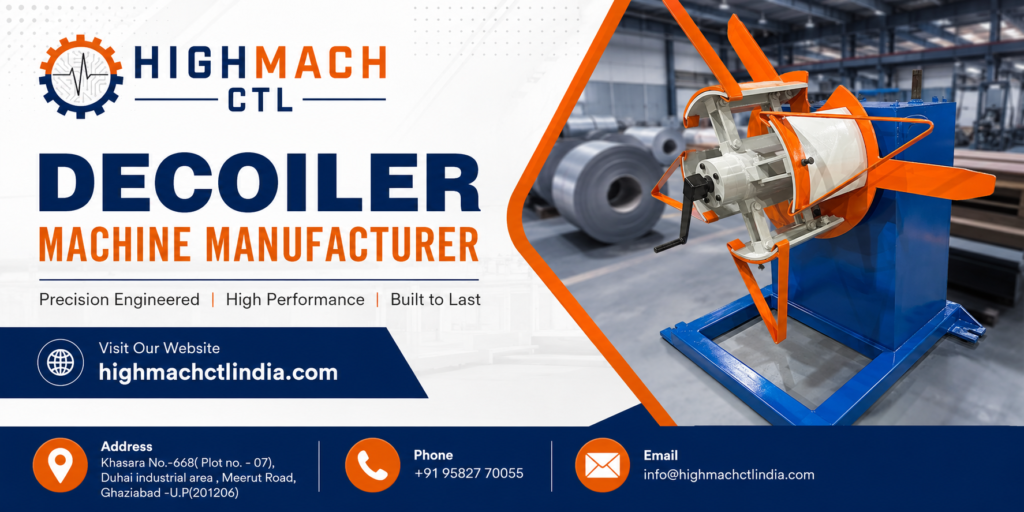
In the simplest terms, a decoiler machine holds a coil of metal (steel, aluminum, copper — you name it) and unwinds it in a smooth, controlled manner so it can feed into the next stage of production, such as a leveler, punch press, roll former, or slitting line.
Think of it like the spool on a fishing reel. If the spool releases line unevenly or jerks unexpectedly, your whole cast gets thrown off. A decoiler works on the same principle, except instead of fishing line, it’s handling heavy, often razor-sharp metal coils weighing anywhere from a few hundred kilograms to several tons.
Because the coil is under constant tension and moving at production speed, even small design flaws in a decoiler can cause misalignment, material waste, or safety hazards. This is exactly why the manufacturer behind the machine matters so much — engineering precision here isn’t optional, it’s essential.
Types of Decoiler Machines You’ll Commonly Encounter
Not all decoilers are built the same, and the right type depends on your coil size, material, and production speed. Here’s a quick comparison to help you get oriented.
Table 1: Types of Decoiler Machines Compared
| Decoiler Type | Best Suited For | Coil Capacity | Key Advantage |
| Manual Decoiler | Small workshops, light gauge material | Up to 1–2 tons | Low cost, simple operation |
| Motorized Decoiler | Mid-size production lines | 2–5 tons | Consistent tension control |
| Hydraulic Decoiler | Heavy gauge, high-volume lines | 5–20+ tons | Handles heavy coils smoothly |
| Double-Head Decoiler | Continuous production without downtime | Varies (dual mandrels) | Minimal changeover time |
Note: Coil capacity ranges are general industry estimates. Actual specs vary by manufacturer and custom configuration.
Why the Manufacturer Matters More Than the Machine Itself
Here’s something a lot of buyers don’t realize until it’s too late: two decoilers can look nearly identical on a spec sheet and still perform completely differently on the floor. The difference comes down to build quality, engineering experience, and after-sales support — all of which trace back to the manufacturer.
A reliable decoiler machine manufacturer doesn’t just sell you a piece of steel and motors. They understand your material, your line speed, your space constraints, and they help you avoid costly mistakes before the machine even leaves the factory.
Key Features and Benefits to Look For
When evaluating decoiler machines, it helps to separate the “nice to have” from the “absolutely essential.” Here’s a quick breakdown.
Table 2: Features and Why They Matter
| Feature | Why It Matters |
| Expandable Mandrel | Allows quick, secure fitting of coils with different internal diameters, reducing changeover time. |
| Tension Control System | Keeps the material feeding evenly, preventing wrinkles, scratches, or misfeeds downstream. |
| Safety Guarding | Protects operators from the coil’s stored energy, which can be dangerous if released suddenly. |
| Coil Car / Loading Cart | Speeds up coil loading and reduces manual handling risks. |
| PLC Integration | Enables synchronization with other line equipment for smoother automated production. |
Note: Not every application needs every feature — match features to your actual production needs and budget.
Step-by-Step Guide: How to Choose the Right Decoiler Machine Manufacturer
Choosing the right partner doesn’t have to feel overwhelming. Follow this process, and you’ll narrow down your options with confidence.
Table 3: The Selection Process, Step by Step
| Step | What to Do |
| 1. Define Your Needs | List coil weight, width, material type, and desired line speed. |
| 2. Shortlist Manufacturers | Look for proven experience, certifications, and industry reputation. |
| 3. Request Technical Specs | Compare motor power, mandrel range, and control systems side by side. |
| 4. Ask About Customization | Confirm the machine can be tailored to your floor space and line layout. |
| 5. Check After-Sales Support | Ask about warranty terms, spare parts availability, and technical assistance. |
| 6. Request a Site Visit or Demo | Wherever possible, see the machine running before committing. |
Note: Skipping the demo step is one of the most common regrets buyers report after installation.
Tips and Best Practices
- Match capacity to your heaviest coil, not your average one. Underspeccing leads to premature wear.
- Prioritize tension control quality over price alone. Poor tension control causes downstream defects that cost more than the machine savings.
- Ask for reference clients in your industry. A manufacturer with relevant experience will anticipate problems before they happen.
- Plan for future scale. If you expect production to grow, slightly oversizing your decoiler can save a costly upgrade later.
- Don’t ignore operator training. Even the best machine underperforms in untrained hands.
Common Mistakes to Avoid
Many production delays and safety incidents trace back to a handful of avoidable mistakes. Here’s a quick do’s and don’ts reference.
Table 4: Do’s and Don’ts When Choosing a Decoiler
| Do | Don’t |
| Verify the manufacturer’s engineering credentials | Assume all suppliers offer the same build quality |
| Get a written warranty and service agreement | Rely only on verbal promises |
| Match the mandrel range to your coil ID variety | Buy a fixed-size mandrel if your coils vary in size |
| Involve your operators in the evaluation | Make the decision purely on paper specs |
| Budget for installation and training costs | Compare quotes based on machine price alone |
Note: A slightly higher upfront investment often pays for itself through reduced downtime and maintenance.
Quick Buying Guide Checklist
Before you sign off on a purchase order, run through this final checklist.
Table 5: Buying Guide Checklist
| Checklist Item | Confirmed? |
| Coil weight and width capacity match your requirements | ☐ |
| Tension control system suits your material type | ☐ |
| Safety features meet local industrial standards | ☐ |
| Manufacturer provides installation support | ☐ |
| Warranty and spare parts policy is clearly documented | ☐ |
Note: Keep this checklist handy during vendor calls — it helps you compare apples to apples.
Frequently Asked Questions
1. What is the average lifespan of a decoiler machine?
With proper maintenance, a well-built decoiler can run efficiently for 15–20 years or more.
2. Can a decoiler be customized for non-standard coil sizes?
Yes. Most reputable manufacturers offer adjustable mandrels and custom builds to fit specific coil dimensions.
3. What’s the difference between a single-head and double-head decoiler?
A single-head decoiler handles one coil at a time, while a double-head design allows one coil to feed while the next is loaded, reducing downtime.
4. How do I know what capacity decoiler I need?
Base it on your heaviest and widest coil, plus a safety margin for future production needs.
5. Is it worth buying from an overseas decoiler machine manufacturer?
It can be, as long as the manufacturer offers clear technical documentation, reliable shipping timelines, and accessible after-sales support.
6. Do decoiler machines require special maintenance?
Routine maintenance mainly involves checking tension components, lubrication points, and safety guards on a regular schedule.
Final Thoughts
Choosing a decoiler machine isn’t just about specs on paper — it’s about finding a manufacturing partner who understands your production line, respects your timeline, and stands behind their equipment long after installation. The right decoiler keeps your line running smoothly, protects your operators, and quietly does its job shift after shift without drama.
At Highmach CTL, we’ve spent years engineering decoiler solutions built around real production challenges, not just catalog specs. If you’re planning a new line or looking to upgrade an aging setup, we’re happy to walk through your requirements and help you find a configuration that actually fits your floor — no pressure, just straightforward guidance from people who know coils inside and out.
Visit: https://highmachctlindia.com/
Call: +91-9811228235
Email: info@highmatchctl.com
Address: Khasara No.-668( Plot no. – 07), Duhai industrial area , Meerut Road, Ghaziabad -U.P(201206)