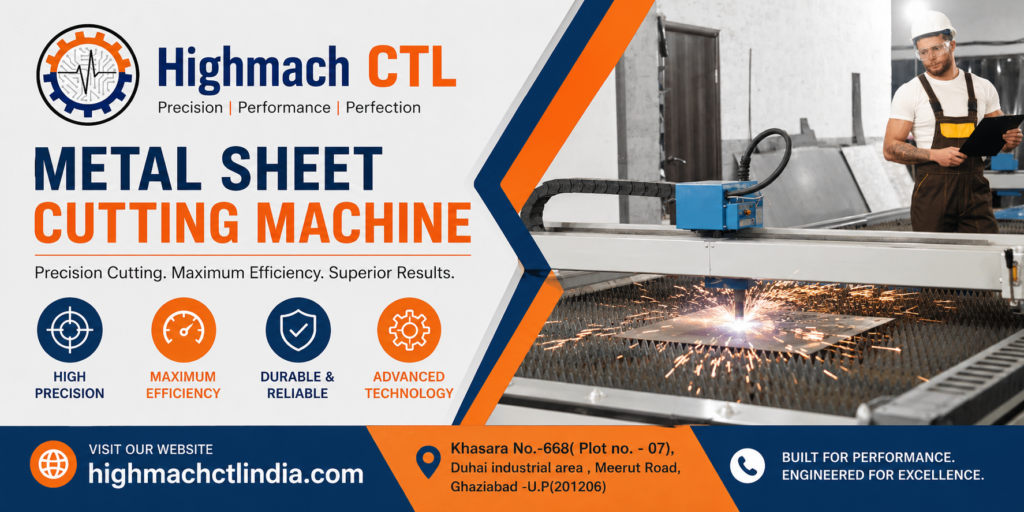
Walk into any fabrication shop that’s struggling with production, and you’ll usually find the same culprit: the wrong cutting equipment for the job. Maybe it’s a plasma unit trying to do laser-level precision work. Maybe it’s a shear that can’t keep up with order volume. Either way, the cost shows up everywhere — wasted material, missed deadlines, and operators nursing a machine that was never built for the task.
If you’re in the market for a Metal Sheet Cutting Machine in 2026, you’re not just buying a tool. You’re making a decision that will shape your shop floor’s speed, accuracy, and bottom line for years. This guide breaks down everything you need to know — in plain language — before you sign a purchase order.
What is a Metal Sheet Cutting Machine, Really?
At its core, a metal sheet cutting machine is exactly what it sounds like — equipment designed to slice through flat metal stock (steel, aluminum, stainless, copper, and more) into precise shapes and sizes. But the “cutting machine” is a broad umbrella. Under it sits a handful of very different technologies, each with its own strengths, quirks, and ideal use case.
Think of it like choosing between a kitchen knife, a food processor, and a laser-guided slicer. All three cut food. Only one is right for julienning carrots at scale.
The Main Types You’ll Encounter
Here’s a quick rundown before we go deeper:
- Laser cutting machines — best for precision, clean edges, and intricate designs
- Plasma cutting machines — fast, cost-effective for thicker metals
- Waterjet cutting machines — no heat distortion, ideal for sensitive materials
- Shearing machines — simple, fast straight-line cuts for high-volume work
- CNC punch/cutting combo machines — versatile for shops handling mixed jobs
Comparison Table: Cutting Technologies at a Glance
| Machine Type | Best For | Max Thickness (approx.) | Precision Level |
| Fiber Laser | Detailed, high-speed precision cuts | Up to 25mm | Very High |
| Plasma | Thicker metals, faster rough cuts | Up to 50mm | Moderate |
| Waterjet | Heat-sensitive or reflective materials | Up to 150mm | High |
| Shearing | Straight-line, high-volume cutting | Up to 20mm | Moderate |
Note: Thickness and precision figures are general industry ranges and can vary by machine model and material type.
Key Features to Look for in 2026
Cutting technology has moved fast over the last few years. Machines today aren’t just faster — they’re smarter, more automated, and easier to integrate into digital workflows. Here’s what actually matters when you’re comparing options.
- Automation and CNC integration — Reduces manual error and speeds up repeat jobs
- Cutting speed vs. accuracy balance — Faster isn’t always better if edge quality suffers
- Material compatibility — Make sure the machine handles your specific metals and gauges
- Energy efficiency — Fiber lasers, for instance, consume far less power than older CO2 systems
- Maintenance and serviceability — A machine that’s cheap to buy but expensive to maintain isn’t a bargain
- Software and nesting capabilities — Good nesting software reduces material waste significantly
Feature Table: What It Is vs. Why It Matters
| Feature | What It Is | Why It Matters |
| CNC Controls | Computer-guided cutting paths | Consistent accuracy across large runs |
| Nesting Software | Auto-arranges cut patterns on sheet | Cuts material waste, saves cost |
| Fiber Laser Source | Solid-state laser generator | Lower power use, longer lifespan |
| Auto Sheet Loading | Automated feeding of raw sheets | Reduces downtime, boosts output |
These features are increasingly standard on mid-to-high-end machines and worth prioritizing even if your budget is tight.
How to Choose the Right Machine: A Step-by-Step Process
Buying a metal sheet cutting machine isn’t a one-size-fits-all decision. Here’s a practical process to work through before you commit.
Step-by-Step Buying Process
| Step | Action |
| 1 | Identify your primary material type and thickness range |
| 2 | Estimate your monthly production volume |
| 3 | Shortlist machine types that match your precision needs |
| 4 | Compare total cost of ownership, not just sticker price |
| 5 | Request a live demo or sample cut before purchasing |
| 6 | Confirm after-sales support, training, and spare parts availability |
Following this sequence helps avoid the most common buying mistake: choosing a machine based on price alone.
Tips and Best Practices
- Don’t over-buy capacity you won’t use. A machine rated for 30mm steel is wasted if you mostly cut 6mm sheet.
- Factor in floor space and power requirements early. Some machines need three-phase power or dedicated ventilation.
- Train your operators properly. Even the best machine underperforms in untrained hands.
- Schedule preventive maintenance. Lens cleaning, alignment checks, and consumable replacement extend machine life significantly.
- Ask for a trial cut on your actual material. Spec sheets don’t always reflect real-world edge quality.
Common Mistakes to Avoid
Do’s and Don’ts Checklist
| Do | Don’t |
| Match the machine to your actual material range | Buy based on brand hype alone |
| Compare total cost of ownership over 5 years | Ignore consumable and maintenance costs |
| Request references from existing customers | Skip the demo or sample cut stage |
| Plan for future production growth | Buy the bare minimum and outgrow it in a year |
A little diligence upfront saves a lot of regret (and money) down the line.
Frequently Asked Questions
1. What is the most accurate metal sheet cutting machine?
Fiber laser cutting machines generally offer the highest precision, especially for thin to medium-gauge metals with intricate designs.
2. Is plasma cutting cheaper than laser cutting?
Yes, plasma machines typically have a lower upfront cost and are well-suited for thicker materials, though they offer less precision than lasers.
3. Can one machine handle multiple metal types?
Most modern CNC and laser machines can handle steel, stainless steel, aluminum, and other alloys, but settings need adjustment for each material.
4. How often does a metal sheet cutting machine need maintenance?
Routine checks are usually recommended weekly, with deeper servicing every few months depending on usage volume.
5. What thickness can a fiber laser cutting machine handle?
Most industrial fiber lasers handle up to 20-25mm on mild steel, though this varies by machine wattage and model.
6. Do I need special training to operate these machines?
Yes. While modern CNC interfaces are user-friendly, proper operator training significantly reduces errors and improves machine longevity.
Final Thoughts
Choosing the right metal sheet cutting machine really comes down to knowing your materials, your production volume, and your long-term goals. There’s no universal “best” machine — only the best machine for your specific shop floor.
Whether that’s a fiber laser for precision work, a plasma cutter for speed and thickness, or a shearing machine for high-volume straight cuts, the right fit will pay for itself many times over.
At Highmach CTL, we work with fabricators and manufacturers every day to match the right cutting technology to the right job — no guesswork, no overselling. If you’re weighing your options for 2026, we’re happy to walk through your requirements and help you find a machine that actually fits how you work.