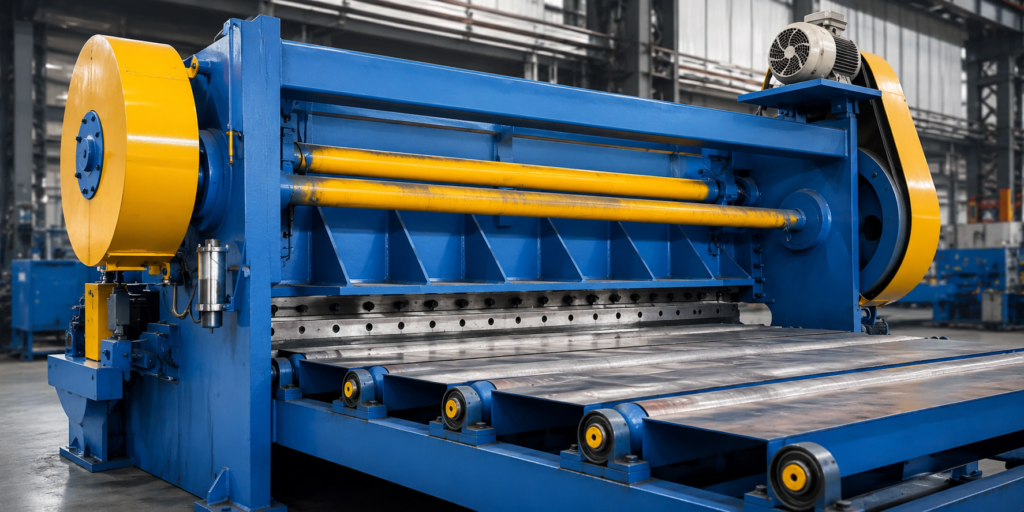
A Hydraulic Shearing Machine is an industrial metal-cutting machine that uses hydraulic power to cut metal sheets, plates, and coils with high precision and efficiency. It provides cleaner cuts, reduces material waste, improves production speed, and is widely used in metal fabrication, automotive, construction, and manufacturing industries.
Precision is one of the most important factors in metal fabrication. Whether manufacturing automotive components, construction materials, electrical panels, or industrial equipment, accurate cutting directly impacts product quality, production efficiency, and overall costs. This is where a Hydraulic Shearing Machine plays a critical role.
A Hydraulic Shearing Machine is designed to deliver clean, accurate, and consistent cuts on a wide range of metal materials. Compared to traditional mechanical shearing methods, hydraulic systems provide greater cutting force, smoother operation, and enhanced control.
At Highmach CTL, we understand the evolving needs of modern metal processing industries. This comprehensive guide explains everything you need to know about Hydraulic Shearing Machines, including their working principle, advantages, applications, key features, and how to choose the right machine for your production requirements.
What is a Hydraulic Shearing Machine?
A Hydraulic Shearing Machine is a metal-cutting machine that uses hydraulic cylinders to generate the force required to shear metal sheets and plates. The machine applies controlled pressure through a moving blade against a fixed blade, resulting in a clean and precise cut.
These machines are commonly used for cutting:
- Mild steel sheets
- Stainless steel sheets
- Aluminum sheets
- Copper sheets
- Galvanized steel
- Industrial metal plates
The hydraulic system ensures consistent force throughout the cutting process, making it suitable for both thin and thick metal materials.
How Does a Hydraulic Shearing Machine Work?
The working principle is straightforward yet highly effective.
Step 1: Material Positioning
The metal sheet is placed on the machine table and aligned using back gauges and positioning systems.
Step 2: Hydraulic Pressure Generation
Hydraulic pumps generate pressure that powers the hydraulic cylinders.
Step 3: Blade Movement
The upper blade moves downward while the lower blade remains stationary.
Step 4: Precision Shearing
The applied force exceeds the material’s shear strength, resulting in a clean cut.
Step 5: Material Collection
The cut pieces are collected for further processing such as bending, punching, welding, or assembly.
This controlled cutting process minimizes deformation and improves dimensional accuracy.
Key Components of a Hydraulic Shearing Machine
Understanding the machine’s main components helps buyers evaluate quality and performance.
Hydraulic System
Provides the power required for cutting operations.
Shearing Blades
High-strength blades designed for durability and precision.
Back Gauge System
Ensures accurate positioning of materials before cutting.
Control Panel
Allows operators to adjust cutting parameters.
Hold-Down Devices
Secure the metal sheet during operation to prevent movement.
Machine Frame
Heavy-duty construction minimizes vibration and maintains cutting accuracy.
Benefits of Using a Hydraulic Shearing Machine
Superior Cutting Precision
Hydraulic systems provide smooth and controlled blade movement, producing accurate cuts with minimal distortion.
Increased Production Speed
Modern Hydraulic Shearing Machines can process large volumes of material quickly, helping manufacturers meet production deadlines.
Reduced Material Waste
Accurate cutting reduces scrap generation and improves material utilization.
Lower Maintenance Requirements
Compared to mechanical systems, hydraulic machines have fewer wear-related issues and require less maintenance.
Versatility
They can handle various materials, thicknesses, and sheet sizes.
Improved Operator Safety
Advanced machines include safety guards, emergency stops, and automated controls that enhance workplace safety.
Hydraulic Shearing Machine vs Mechanical Shearing Machine
| Feature | Hydraulic Shearing Machine | Mechanical Shearing Machine |
| Cutting Accuracy | High | Moderate |
| Power Control | Precise | Limited |
| Noise Levels | Lower | Higher |
| Maintenance | Lower | Higher |
| Material Flexibility | Excellent | Moderate |
| Energy Efficiency | Better | Average |
| Operating Smoothness | Excellent | Moderate |
For industries requiring consistent precision and high productivity, hydraulic shearing technology is generally the preferred choice.
Common Applications of Hydraulic Shearing Machines
Hydraulic Shearing Machines are used across numerous industries.
Metal Fabrication Industry
Cutting sheet metal for fabrication and assembly processes.
Automotive Manufacturing
Producing body panels, brackets, structural components, and automotive parts.
Construction Sector
Preparing steel plates, roofing materials, and structural components.
Electrical Equipment Manufacturing
Cutting panels and enclosures for electrical systems.
HVAC Industry
Producing ducts, ventilation systems, and sheet metal components.
Industrial Machinery Production
Preparing metal parts used in heavy machinery and equipment manufacturing.
Essential Features to Look for When Buying a Hydraulic Shearing Machine
Choosing the right machine can significantly impact productivity and profitability.
CNC Control System
Modern CNC systems improve accuracy and automate repetitive operations.
Adjustable Blade Gap
Allows optimization for different material thicknesses.
High-Quality Blades
Premium blades improve cut quality and extend service life.
Robust Frame Construction
A rigid frame ensures long-term accuracy and durability.
Energy-Efficient Hydraulic System
Reduces operating costs while maintaining performance.
Safety Features
Look for machines equipped with safety guards, sensors, and emergency stop systems.
Expert Tips for Maximizing Performance
To achieve the best results from a Hydraulic Shearing Machine:
- Regularly inspect hydraulic fluid levels.
- Keep blades sharp and properly aligned.
- Train operators on machine settings and safety procedures.
- Perform preventive maintenance on hydraulic components.
- Use correct blade clearances for different materials.
- Maintain proper lubrication schedules.
Consistent maintenance not only improves performance but also extends machine lifespan.
Industry Trends in Hydraulic Shearing Technology
The metal processing industry is increasingly adopting smart manufacturing technologies.
Emerging trends include:
- CNC automation
- Industry 4.0 integration
- Remote diagnostics
- Energy-efficient hydraulic systems
- Servo-hydraulic controls
- Predictive maintenance technologies
These innovations help manufacturers improve productivity, reduce downtime, and achieve greater precision.
Why Choose Highmach CTL?
At Highmach CTL, we specialize in advanced metal processing solutions designed to meet the demands of modern manufacturing.
Our Hydraulic Shearing Machines are engineered for:
- High cutting accuracy
- Robust construction
- Long operational life
- Enhanced safety
- Energy efficiency
- Reliable performance
With years of industry expertise, Highmach CTL provides customized solutions that help businesses improve productivity and achieve consistent product quality.
Frequently Asked Questions (FAQs)
1. What is a Hydraulic Shearing Machine used for?
A Hydraulic Shearing Machine is used to cut metal sheets and plates accurately using hydraulic force. It is commonly used in fabrication, automotive, construction, and manufacturing industries.
2. What are the advantages of a Hydraulic Shearing Machine?
The main advantages include precision cutting, higher productivity, reduced material waste, lower maintenance requirements, and improved safety.
3. Can a Hydraulic Shearing Machine cut stainless steel?
Yes. Hydraulic Shearing Machines can efficiently cut stainless steel, mild steel, aluminum, galvanized steel, and other metal materials.
4. How do I choose the right Hydraulic Shearing Machine?
Consider factors such as material type, sheet thickness, production volume, automation requirements, blade quality, and machine capacity.
5. How often should a Hydraulic Shearing Machine be maintained?
Routine inspections should be performed regularly, while comprehensive preventive maintenance schedules should follow the manufacturer’s recommendations to ensure optimal performance.
Conclusion
A Hydraulic Shearing Machine is an essential investment for manufacturers seeking precision, efficiency, and reliability in metal cutting operations. Its ability to deliver clean cuts, reduce waste, and improve production speed makes it a valuable asset across multiple industries.
As manufacturing standards continue to evolve, advanced hydraulic shearing technology helps businesses stay competitive while maintaining high-quality output. By selecting the right machine and following proper maintenance practices, companies can maximize productivity and achieve long-term operational success.
Contact Us
Looking for a high-performance Hydraulic Shearing Machine for your metal processing operations?
Highmach CTL offers reliable, precision-engineered solutions designed to meet your production requirements.
Contact us today to discuss your project needs, request expert guidance, or explore our complete range of metal processing machines.
Call now to speak with our specialists and find the ideal solution for your business.
Visit us to learn more about how Highmach CTL can help improve your manufacturing efficiency and cutting precision.